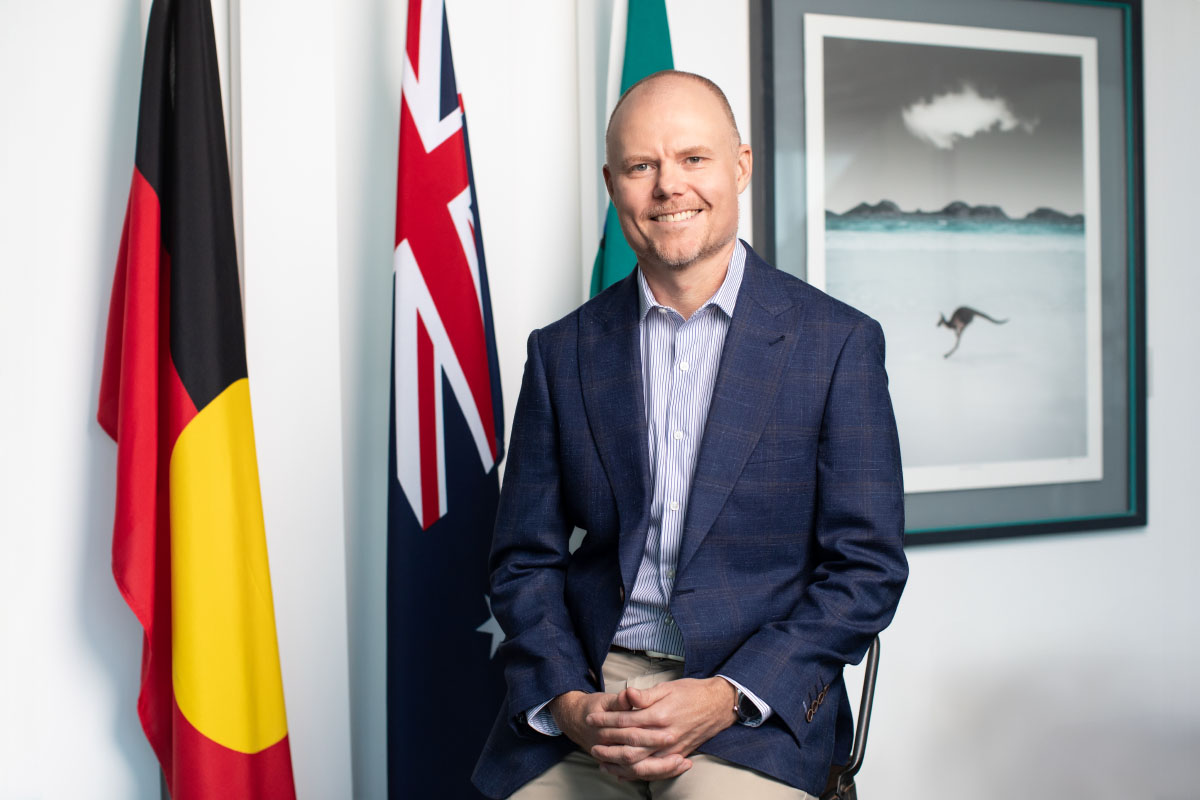
Interview with the Australian Ambassador to Peru, James Yeomans
Backed by a growing wave of investments and a shared commitment to sustainability, the mining alliance between Australia and Peru is reaching new heights. Ahead of Peru’s historic participation at IMARC 2026, ProActivo spoke exclusively with Australian Ambassador James Yeomans about critical minerals, the integration of artificial intelligence, and how Australian technology is helping optimize Peruvian operations for the future.
By: Mónica Belling
After your first few months as Ambassador, how do you see Australian capital assessing the competitiveness of mining projects in Peru compared with other markets in the region?
Australian investors continue to have confidence in Peru and in the potential of its mining sector. This year, we have seen clear examples of that confidence through significant Australian investments in the industry. For instance, Australian company Fortescue has invested in the Cañariaco copper project in Lambayeque, which is regarded as one of the most promising copper projects in Latin America.
Another example is Australian company Bradken, which inaugurated its steel mill liner manufacturing plant in Chilca, Cañete. Through this investment, Bradken has established Peru as its regional hub. Both examples reflect the long-term commitment and confidence of Australian investors in the country.
In addition, during her recent visit to New York, President Fujimori participated in the Australia-Latin America High-Level Dialogue organised by CAF – Development Bank of Latin America and the Caribbean, reaffirming her commitment to creating favourable conditions for foreign investment in Peru. This sends a positive signal for attracting additional international capital.
As the sector works towards modernisation by 2031, what opportunities for cooperation and technical dialogue could strengthen the partnership between Peru and Australia?
Engagement between Australian and Peruvian mining stakeholders is already frequent. However, IMARC and PERUMIN continue to be essential platforms for strengthening bilateral cooperation and technical dialogue. They provide valuable opportunities to exchange solutions to shared challenges, from energy transition and decarbonisation to technological innovation. Many of the partnerships, projects and investments we see today began with conversations initiated at these forums.
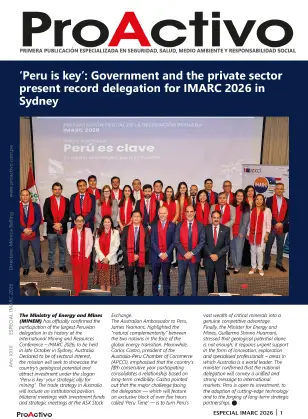
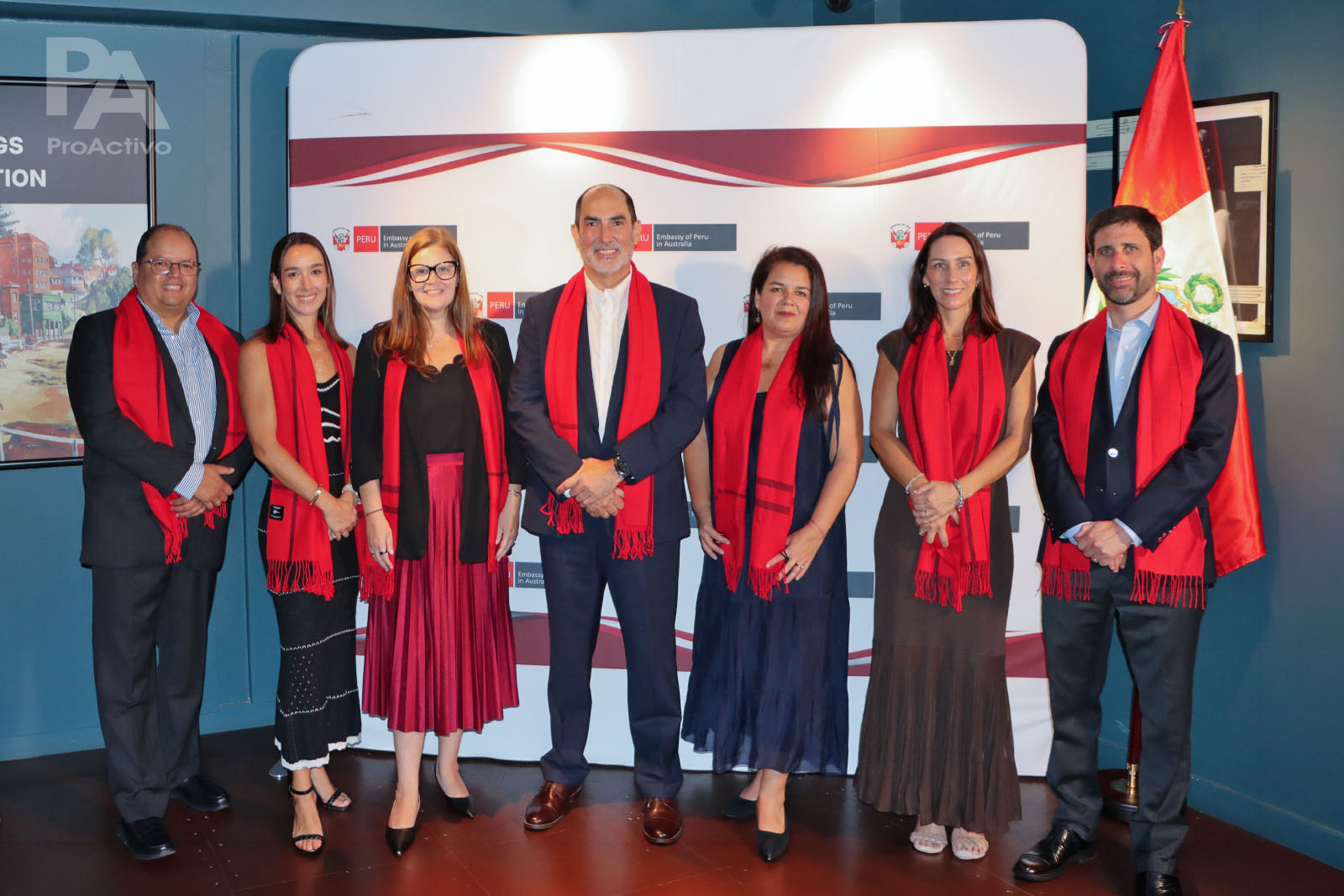
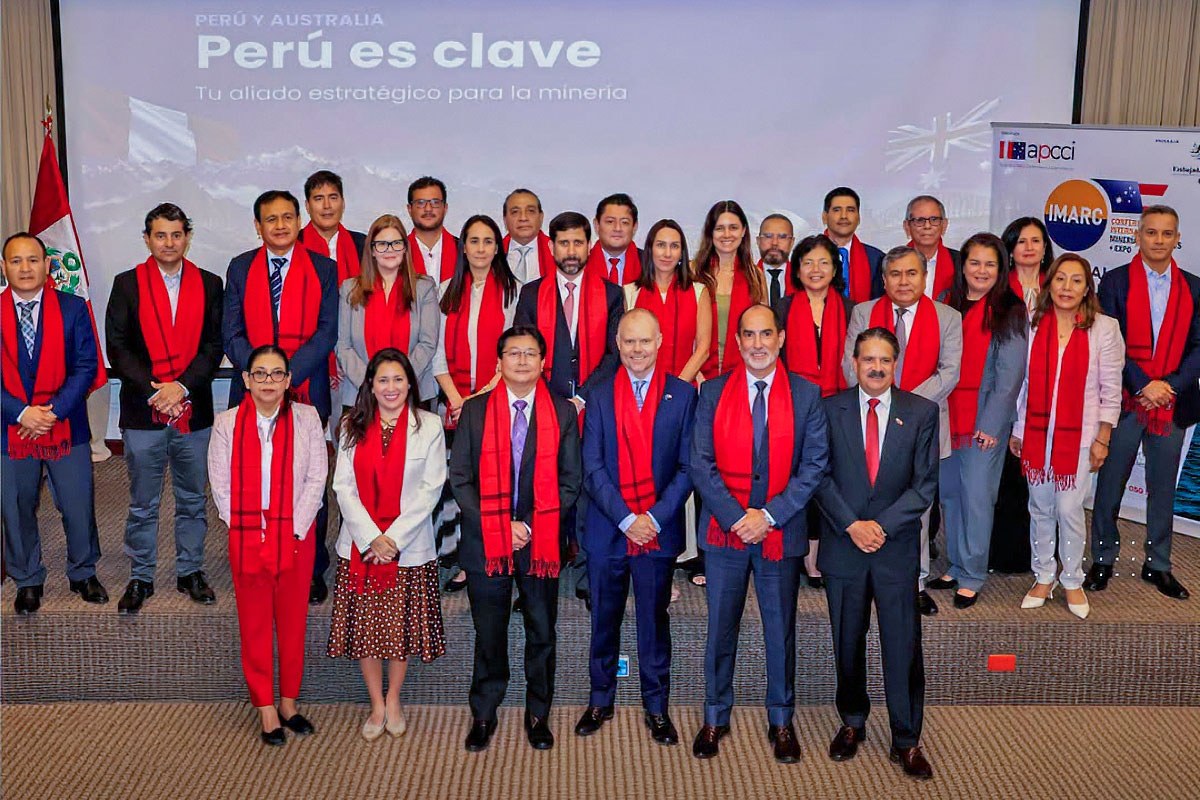
IMARC 2026 represents an excellent opportunity to deepen the relationship. Peru will participate with the largest delegation in its history, comprising more than 50 representatives, including government authorities, technical and regulatory bodies, leading mining companies and business organisations.
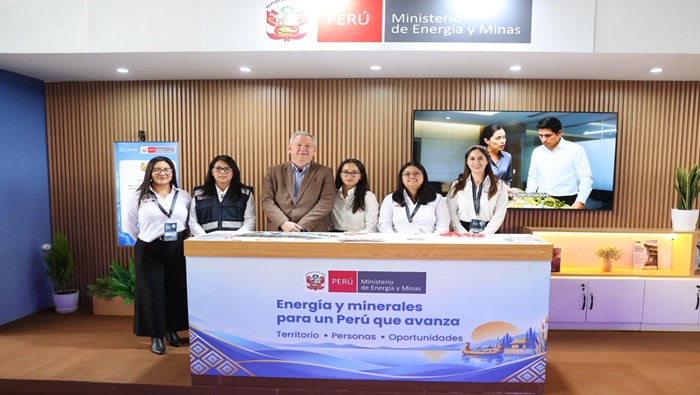
This year, IMARC was once again declared an event of national interest by the Peruvian Government, and for the first time, the Ministry of Energy and Mines organised an official launch event for the Peruvian delegation attending the conference. This demonstrates the growing interest in strengthening ties with Australia and learning from the experience of one of the world’s leading mining nations.
How are Australian Mining Equipment, Technology and Services (METS) companies helping to improve productivity and safety in mining operations in Peru?
The global mining industry faces the challenge of ensuring a responsible supply of resources for both present and future generations. Achieving a balance between mineral production and sustainable operations is therefore essential.
In this context, Australian METS companies, with their strong focus on innovation and sustainability, are key partners for the global mining industry and, naturally, for Peru’s mining sector. Australian METS companies are at the forefront of developing and implementing innovative practices and technologies across the entire mining lifecycle.
Some of their specialised solutions are already contributing to Peruvian mining operations in areas such as operational decarbonisation, waste reduction, improved water resource management and minimising environmental impacts.
As major mining nations, how can Peru and Australia strategically collaborate to strengthen their position in the global critical minerals value chain?
Australia and Peru are both key global suppliers of the critical minerals needed for the energy transition. This year at IMARC, a dedicated dialogue on critical and strategic minerals will be held for the first time, providing a concrete opportunity to showcase and strengthen cooperation between our two countries.
As mining operations increasingly adopt Artificial Intelligence, what lessons from the Australian model could help develop local talent and support this transition?
Artificial Intelligence and other advanced technologies are already integral components of the Australian mining model, and we have many lessons to share. For example, Australian companies that also operate in Peru are using AI to analyse operational data, predict equipment failures and improve mining efficiency.
Recently, during the XVI International Mining Symposium organised by the SNMPE, Peruvian executive Iván López, Vice President of Value Engineering at BHP Australia, delivered valuable insights on this topic. He emphasised that the starting point should be linking technological training with the ability to understand real business challenges, as improving equipment or processes in isolation is not enough.
Iván’s experience also highlights the value of professional exchange between our countries and demonstrates how Peruvian talent and Australian expertise can generate outstanding outcomes for the mining industry.
How does academia engage with the Australian mining sector, and what lessons or experiences could be shared with Peru?
For Australia’s mining industry, academia is a close and strategic partner. The relationship goes beyond aligning university curricula with industry needs; it also encompasses strong collaboration in research and development.
This will also be a focus area for the Peruvian delegation at IMARC, as there are significant opportunities for collaboration between Australian and Peruvian academic institutions and mining companies.
Looking ahead to IMARC 2026, what types of commercial partnerships, investments and technology exchanges do you expect to emerge from Peru’s participation?
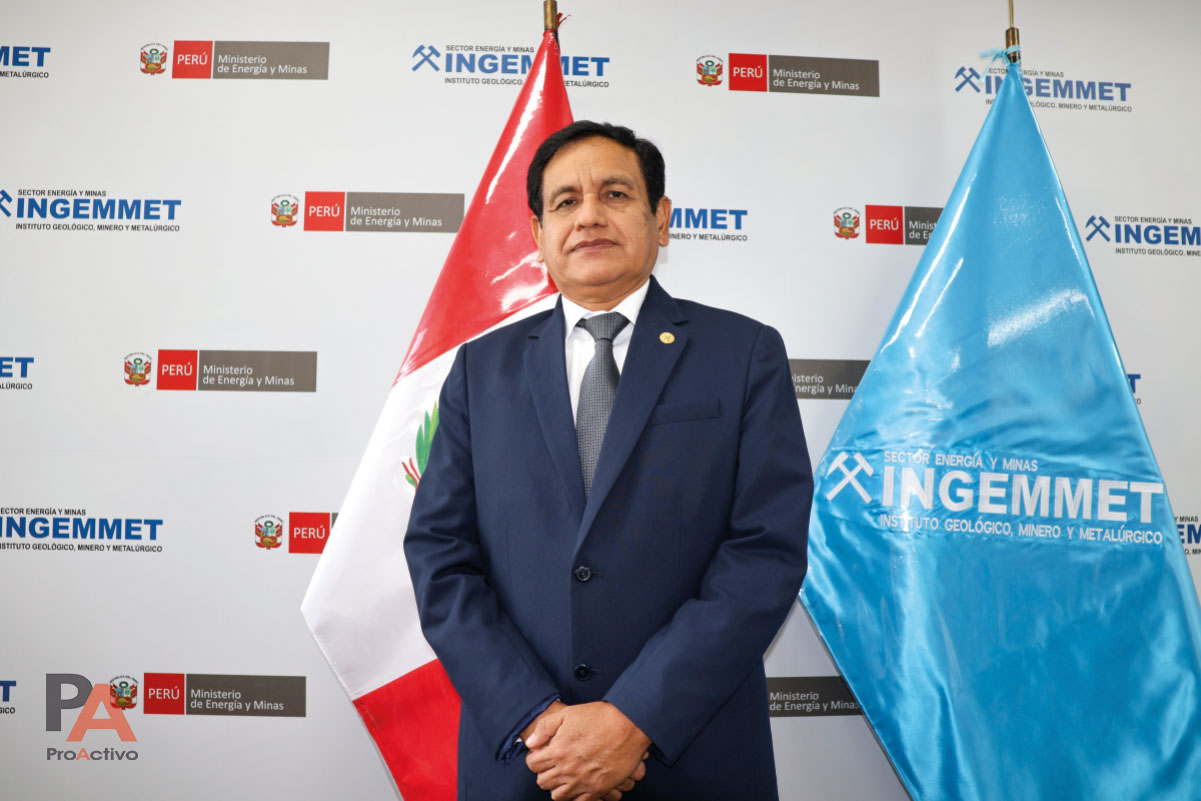
We share the vision of the Ministry of Energy and Mines and the position expressed by Minister Shinno during the IMARC launch event. This forum will provide an opportunity both to strengthen existing relationships and to foster new conversations that could lead to future projects and investments.
Peruvian delegates will have the opportunity to showcase concrete investment opportunities in the country, including Peru’s project pipeline, its critical minerals potential and, importantly, the outcomes of the Women for Sustainable Mining Australia-Peru Fellowships program, which highlights bilateral cooperation in talent development and women’s leadership in the mining sector.
I am confident that Peru’s participation in this year’s IMARC will be highly successful.






Deja una respuesta