
The value lies not only in learning about new technologies, but in connecting the specific operational needs of Peruvian companies with solutions that have already been tested in some of the most demanding mining environments globally
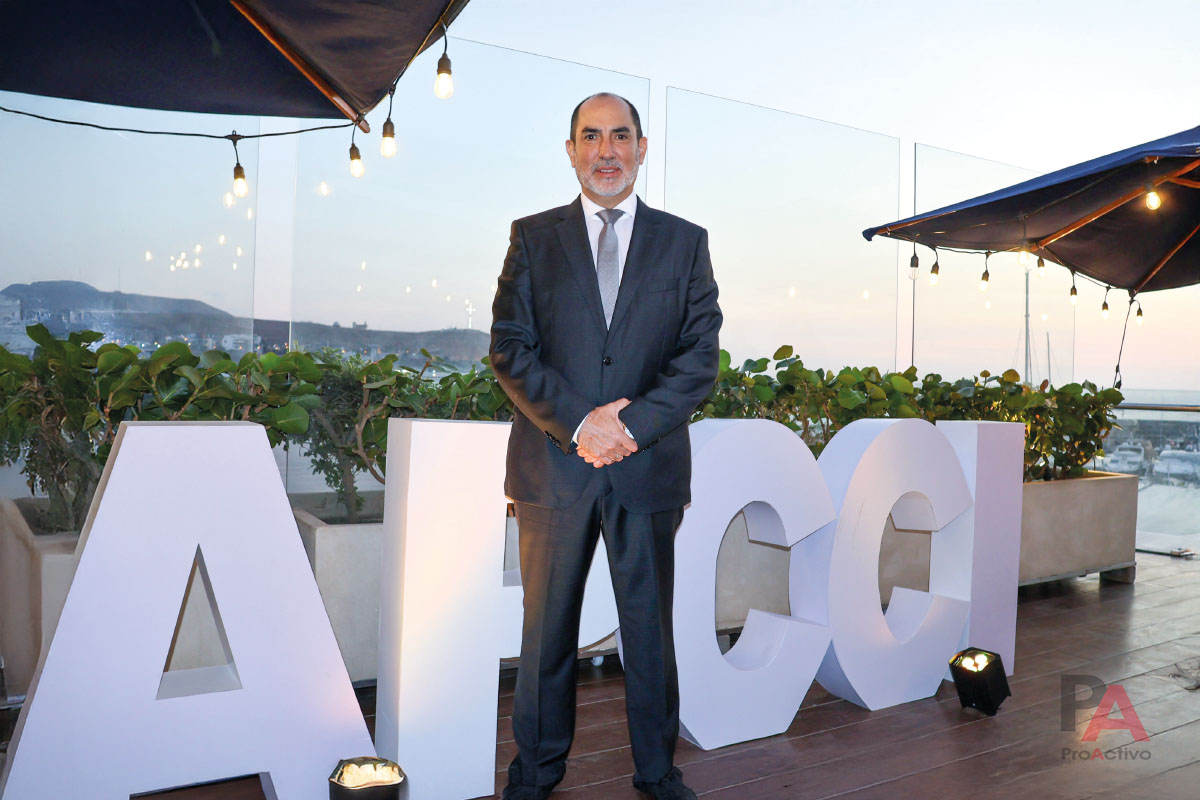
As Peruvian mining faces increasingly complex operational, environmental, and high-altitude challenges, adopting world-class innovation has become a strategic priority. In an exclusive Q&A, Carlos Castro, President of the Australia-Peru Chamber of Commerce (APCCI), discusses how participation in the International Mining and Resources Conference (IMARC) is driving technology transfer, accelerating digital adoption, and elevating the competitiveness of local suppliers.
How does IMARC accelerate the adoption of Australian METS to solve Peru’s operational challenges?
There is a phrase that sums up the relationship between mining and METS (Mining Equipment, Technology and Services) very well: «without METS there is no mining and without mining there is no METS». Mining activity requires innovation, technology and specialized services to improve its productivity, safety and environmental performance, while METS suppliers need a dynamic industry where their solutions can be developed, validated and scaled.
In this context, IMARC (International Mining and Resources Conference + Expo) occupies a unique position because it brings together in the same space the entire mining value chain: mining companies, technology and service providers, investors, researchers, authorities and industry leaders. This allows conversations about innovation to be directly linked to the real challenges faced by mining operations.
For Peru, participation in IMARC provides direct access to one of the most advanced METS ecosystems in the world. The value lies not only in learning about new technologies, but in connecting the specific operational needs of Peruvian companies with solutions that have already been tested in some of the most demanding mining environments globally.
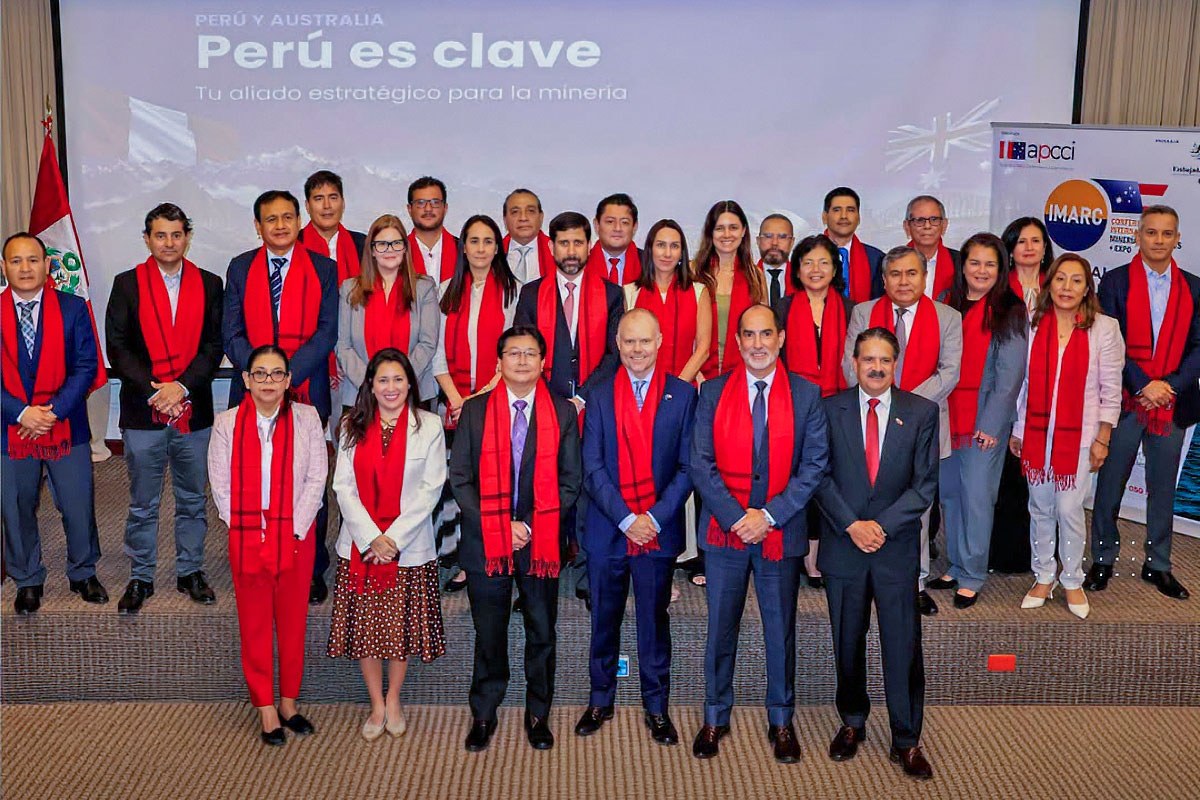
The Peruvian delegation plays an important role in bringing Australian suppliers closer to the reality of our industry, facilitating a better understanding of the country’s specific challenges and opportunities. Ultimately, the goal is to accelerate the adoption of innovative solutions that contribute to a more competitive, efficient and sustainable Peruvian mining.
Given Peru’s geographic, social, and environmental challenges, which innovations are most urgent for safety and profitability?
Peru faces particular challenges that condition the competitiveness of its mining operations: deposits located in remote and high mountain areas, greater environmental demands, a growing demand for efficiency in the use of resources and the permanent need to strengthen people’s safety. Given this, there are several technologies whose adoption is especially relevant.
Among the most important are automation, artificial intelligence, advanced data analytics, remote monitoring, and operational safety technologies. These tools allow large volumes of information to be processed in real time to predict failures, optimize equipment maintenance, improve risk management, and increase the productivity of operations.
Likewise, solutions such as digital twins allow operating scenarios to be simulated and alternatives to be evaluated before implementing them, while the zero-entry approach seeks to minimize people’s exposure to high-risk areas through automation and remote controls.
From a sustainability perspective, technologies aimed at optimizing water and energy consumption, reducing emissions, improving mineral recovery and advancing the electrification of fleets and equipment are also priorities. These innovations not only contribute to more responsible mining, but also generate operational efficiencies and reduce costs in the long term.
The Australian experience is especially valuable because Australia has developed many of these solutions to face challenges similar to those of Peru: remote operations, long distances, complex geographical conditions and constant pressure to improve safety, productivity and environmental performance. Precisely for this reason, spaces such as IMARC allow us to learn about technologies already tested in the field and evaluate how to adapt them to the reality of Peruvian mining.
How can IMARC allow Peruvian companies to shorten their learning curve in artificial intelligence and fleet electrification?
IMARC’s main contribution is that it allows companies to move from concepts to actual implementation cases. For a company that is evaluating the use of artificial intelligence or fleet electrification, being able to interact directly with technology providers, developers, and mining companies that have already traveled that path significantly reduces uncertainty and accelerates decision-making.
The value is not only in knowing new technologies, but in understanding how they are implemented in practice: what the infrastructure requirements are, what operational and organizational changes they require, what challenges other companies faced, and what the results have been in terms of productivity, safety, costs, and sustainability.
IMARC also offers the possibility to compare experiences from different regions of the world and to access technologies at different levels of maturity. This helps Peruvian companies identify solutions that really fit their needs, avoiding lengthy trial and error processes and optimizing their investments.
A particularly valuable aspect is the opportunity to converse not only with technology providers, but also with end users. Hearing directly from those who already operate electrified fleets or use artificial intelligence for predictive maintenance, process optimization and decision-making allows practical lessons to be drawn that are difficult to gain through presentations or case studies.
In short, both artificial intelligence and electrification represent much more than the adoption of new tools; they imply a transformation of processes, capabilities and work models. IMARC allows Peruvian companies to learn from experiences already proven internationally, shorten their learning curve and accelerate a technological transition that will be key to the future competitiveness of Peruvian mining.
How will APCCI help the Peruvian delegation secure commercial agreements and technology transfers?
The role of the Australia-Peru Chamber of Commerce (APCCI) is to act as a bridge between the mining, technological and innovation ecosystems of both countries. Our objective is not only to accompany a delegation to IMARC, but to generate the conditions for Peruvian companies and institutions to arrive with a clear agenda of relationship, cooperation and development of opportunities.
To do this, we work beforehand identifying the interests, challenges and objectives of the participants, which allows us to facilitate strategic connections with METS companies, research centres, specialised institutions and Australian and international technology providers. We also promote B2B meetings, high-level networking spaces and meetings aimed at generating concrete opportunities for collaboration.
Our approach is that these interactions transcend the event and can become commercial agreements, innovation projects, training programs, technology transfer or long-term alliances. To that end, IMARC constitutes an exceptional platform to establish direct relationships with those who are developing and implementing the technologies that are transforming mining worldwide.
We have already seen concrete examples of the value of this type of linkage. Based on contacts generated in Australia, OSINERGMIN was able to establish a relationship with the Victorian Tunnelling Centre (VTC) in Holmesglen, which later led to a cooperation agreement. Cases like this show that a meeting initiated within the framework of IMARC can evolve into initiatives with a tangible impact on capacity building and knowledge exchange.
For this reason, at APCCI we understand that the success of the delegation is not measured only by its participation in the event, but by the relationships, projects and opportunities that are generated subsequently. Our goal is that each connection has the potential to translate into concrete collaboration and that the Peruvian delegation returns with tools, alliances and knowledge that contribute to strengthening the competitiveness and sustainability of Peruvian mining.
How does the Australian ecosystem enable Peruvian tech providers to elevate their standards and global competitiveness?
The relationship between Peru and Australia should not be understood only as a way to incorporate new technologies, but as an opportunity to strengthen the capacities of the Peruvian supplier ecosystem. Exposure to leading companies in innovation, automation, digitalization and sustainability allows local suppliers to learn first-hand about the trends that are transforming global mining and adapt their value propositions to respond to these new challenges.
Contact with the Australian ecosystem opens up opportunities that go beyond a customer-supplier relationship. It can lead to strategic alliances, representation agreements, joint development of solutions, knowledge transfer and even the incorporation of Peruvian companies into international supply chains. All this contributes to raising the standards of innovation, quality, safety and environmental performance of the local supplier sector.
In addition, Peruvian suppliers have an important advantage: they have a deep understanding of the particularities of national mining, from its geography and operating conditions to its social and regulatory challenges. When this local knowledge is combined with the technological and innovative experience of Australian companies, opportunities are generated to develop more efficient solutions that are better adapted to the reality of Peru.
In this regard, the objective should not only be to adopt technologies developed in other markets, but also to promote collaboration processes that strengthen national capacities and develop increasingly sophisticated, competitive suppliers with export potential.
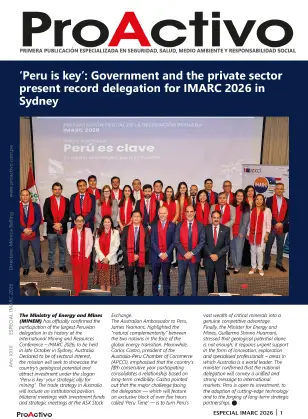
Esta nota forma parte de la  Edición Especial: IMARC 2026

Email: [email protected]








Deja una respuesta