
How AI Music Generator Reframes Music Creation Workflow
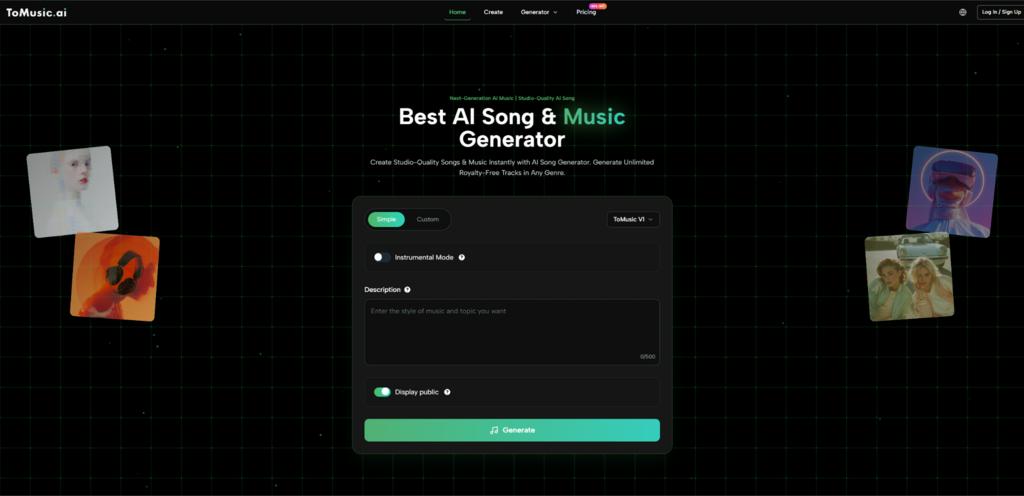
The difficulty of making music has never been about lacking ideas. It has always been about the distance between imagination and execution. Most people can describe a feeling, a scene, or even a full song in their head, yet very few can translate that into an actual track without spending years learning tools and theory. This gap is where an AI Music Generator becomes meaningful.
Instead of forcing users to adapt to software, the system adapts to how people naturally think. You describe what you want, and something tangible appears. In my testing, this does not eliminate effort entirely, but it changes where effort is applied. The challenge shifts from technical execution to clarity of intent.
That change alone makes music creation feel less like a specialized skill and more like an accessible process.
Why Traditional Music Workflows Create Friction
High Entry Barrier Before Output Exists
Conventional music production requires:
- understanding digital audio workstations
- familiarity with instruments or MIDI
- knowledge of rhythm, harmony, and structure
Before hearing anything meaningful, a user must already invest significant time.
Slow Feedback Loops Limit Exploration
Each idea requires:
- setup
- arrangement
- rendering
This slows down experimentation. Many ideas never get tested because the cost of trying them is too high.
Technical Skills Shape Creative Outcomes
In many cases:
- what gets created depends on what the user knows how to execute
- not necessarily what they want to express
This introduces a constraint that is not purely creative.
How AI Systems Change The Starting Point
Language Becomes The Primary Interface
Instead of using tools, users rely on descriptions such as mood, style, instrumentation, and Lyrics to Music AI. This aligns more closely with how people think about music.
Immediate Output Reduces Uncertainty
Instead of imagining:
- users can generate and listen immediately
- ideas become testable in seconds
This creates a faster feedback loop.
Iteration Replaces Construction
Rather than building step by step:
- users generate multiple versions
- evaluate and refine
The process becomes cyclical rather than linear.
What Actually Happens Behind The Scenes
Step One Interpreting Text Into Musical Parameters
When a prompt is entered, the system translates:
- descriptive words into tempo, key, and style
- emotional cues into harmonic tendencies
This is where intent is first converted into structure.
Step Two Generating Musical Components
The system constructs:
- chord progressions
- melodies
- rhythmic patterns
These are assembled based on learned patterns from large datasets.
Step Three Rendering Final Audio Output
All components are combined into:
- a complete audio track
- with optional vocals
- ready for playback or download
The result is a finished piece rather than a fragment.
How To Use The Platform In Practice
Step One Enter Prompt Or Lyrics Input
Users can:
- describe a sound or feeling
- or input structured lyrics
The input defines the direction of the output.
Step Two Select Style And Basic Preferences
Available options typically include:
- genre
- mood
- vocal inclusion
These help guide the generation process.
Step Three Generate And Compare Results
The system produces multiple variations:
- outputs differ even with the same input
- selecting the best version is part of the process
Iteration improves alignment with intent.
Comparing AI-Based And Traditional Workflows
| Aspect | Traditional Production | AI-Based Generation |
| Learning Curve | Steep | Minimal |
| Time To First Output | Long | Short |
| Creative Control | Direct and precise | Indirect through prompts |
| Iteration Cost | High | Low |
| Output Variety | Limited by effort | Naturally diverse |
This comparison shows a redistribution of effort rather than a replacement.
Where This Approach Is Most Effective
Content Creation With Time Constraints
For creators working on:
- short videos
- social media content
- repeated formats
speed and flexibility are valuable.
Early Stage Idea Exploration
Instead of committing early:
- users can test multiple directions
- refine based on actual output
This reduces uncertainty.
Non-Technical Creative Workflows
People without production skills can:
- express ideas naturally
- rely on the system for execution
This broadens participation in music creation.
Observed Strengths In Real Use
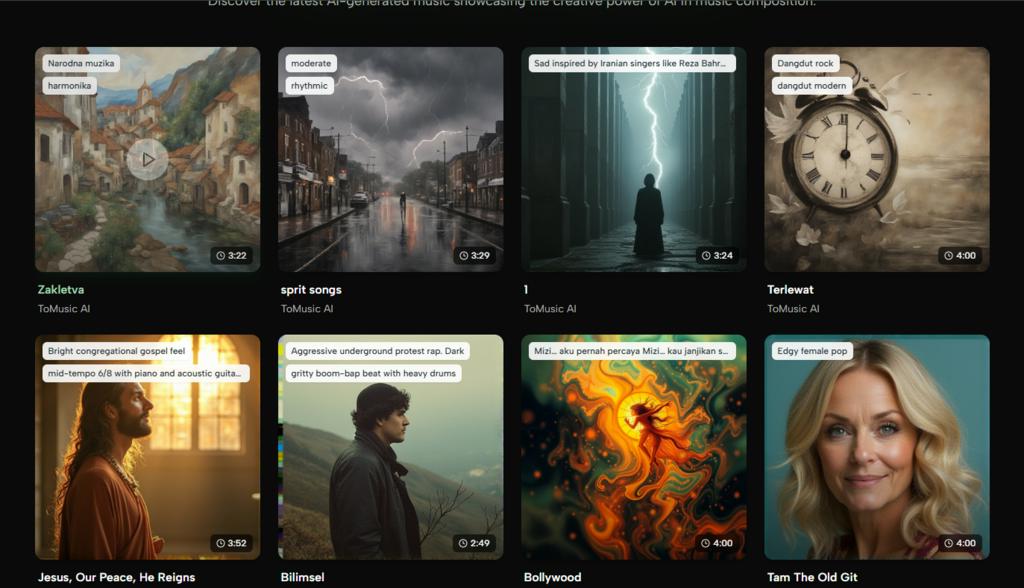
Fast Translation From Idea To Output
In my experience:
- initial results appear quickly
- ideas become tangible almost instantly
This changes how often users experiment.
High Variation Encourages Exploration
Each generation produces:
- slightly different interpretations
- unexpected results that can inspire new ideas
Reduced Dependence On Technical Knowledge
Users focus on:
- describing intent
- evaluating outcomes
rather than operating tools.
Limitations That Should Be Acknowledged
Prompt Sensitivity Affects Consistency
Small changes in wording can lead to:
- significantly different outputs
- difficulty in reproducing results
Limited Fine-Grained Control
Users cannot always specify:
- exact arrangement details
- precise timing or instrumentation adjustments
Iteration Remains Necessary
In practice:
- the first result is rarely final
- multiple attempts improve quality
This introduces a different type of effort.
How Creative Roles Are Quietly Changing
Instead of building every element manually, users:
- define intent
- review generated outputs
- select the most suitable version
This shifts creativity toward decision-making and curation.
What This Suggests About Future Creative Tools
The pattern seen here is part of a broader shift:
- from tool-based interaction
- to intent-based interaction
Music is only one example. Similar changes are appearing in:
- image generation
- video creation
- text production
A Practical Way To Understand The System
It may be useful to think of this type of platform as:
- a translation layer
- between human ideas and digital output
rather than a replacement for traditional production tools.
Why This Matters For Creative Workflows
Reducing the gap between idea and execution changes how often ideas are explored. When the cost of trying something is low:
- experimentation increases
- creative blocks decrease
- iteration becomes natural
The system does not remove complexity entirely, but it moves it away from the user’s immediate experience.