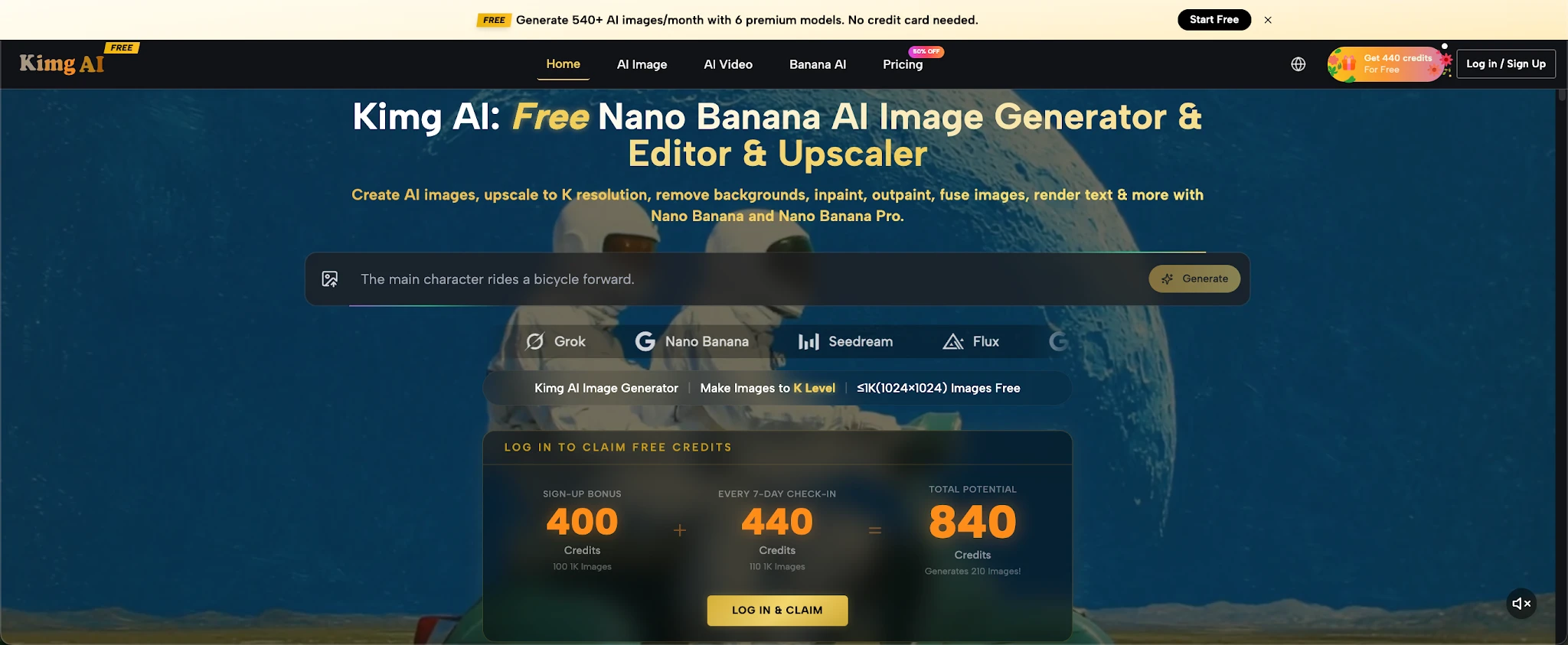
Before a product exists in physical form, it already needs to look good — in a deck, a proposal, a teaser campaign. That’s the gap Nano Banana AI on Kimg AI was practically built to fill. As one of the flagship image generation models on the Kimg AI platform, Nano Banana AI turns a written description or rough reference into a polished, presentation-ready visual — no studio, no prototype required.
I. Generate Concept Images That Actually Win Clients
You don’t need a finished product to show what it looks like. With the right AI image generator, a well-written prompt becomes a photorealistic render in seconds.
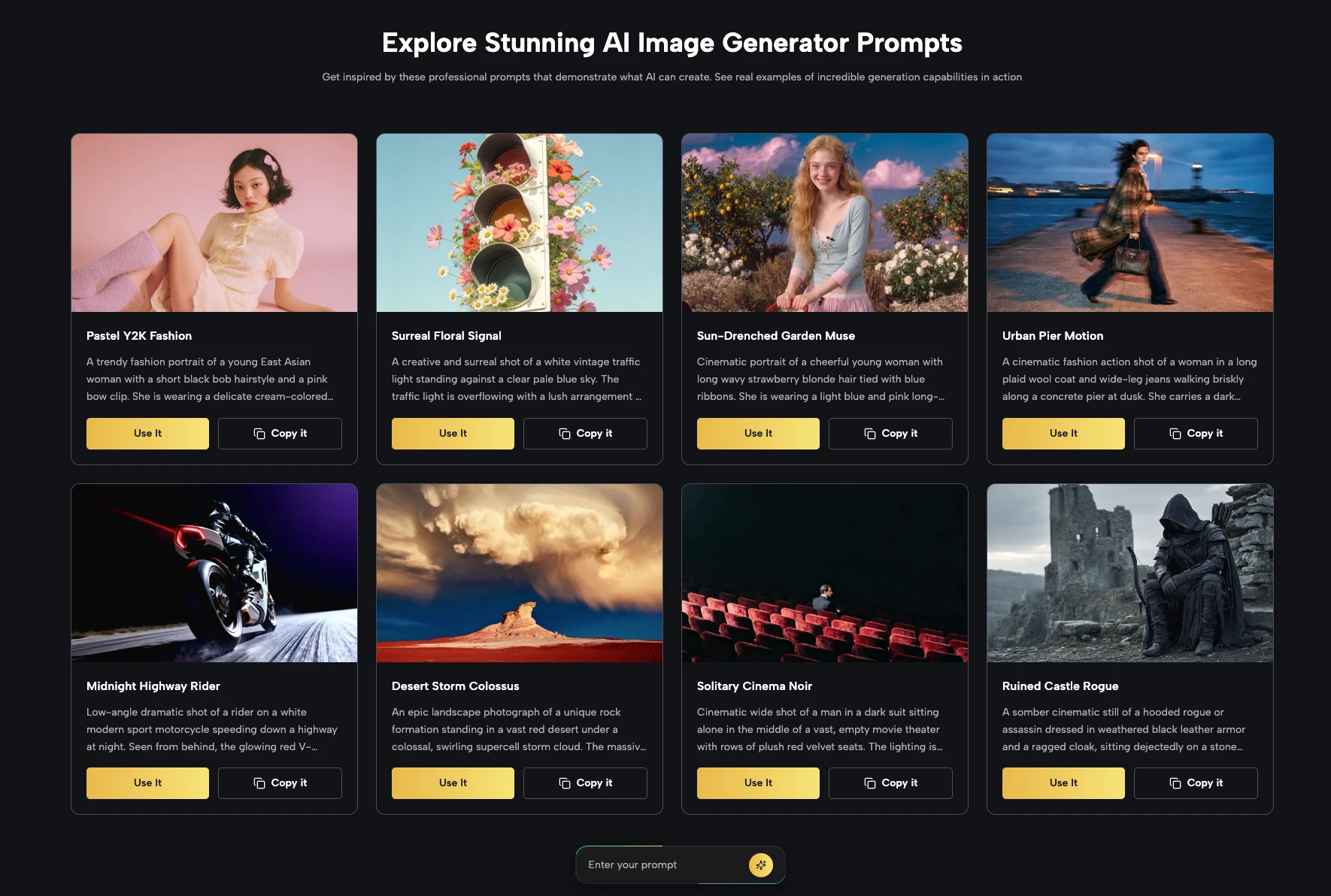
Kimg AI gives you immediate access to multiple top-tier models for exactly this kind of work:
- Nano Banana — Upload up to 4 reference images, describe your product concept, and get hyper-realistic outputs with accurate textures and lighting.
- Nano Banana 2 — Google’s next-gen model with stronger prompt comprehension; generates up to 4 image variations per request so you can compare directions before committing to one.
- Seedream — When you need a fast round of rough concepts for internal review, Seedream generates high-quality images at industry-leading speed.
- Flux — Need to tweak a detail without redoing the whole image? Flux handles context-aware editing, letting you modify specific elements while leaving everything else intact.
- GPT Image 2 and Grok Imagine — Additional models available on the same platform, so you never have to leave to test a different style.
All of these live under one roof on Kimg AI, which means switching between models takes seconds, not signups.
II. Why Concept Visuals Matter Before Launch
Most product teams wait too long to create visuals. They assume they need the actual object first. They don’t.
Investors, buyers, and early adopters respond to how something looks — not just what it does. A well-rendered concept image communicates quality, intent, and attention to detail before a single unit is manufactured.
- A clean product render in a proposal tells stakeholders you’ve thought through the design.
- Concept visuals let you test market reactions before committing to production.
- They give your social media team something real to post during the pre-launch window.
Nano Banana is particularly well-suited here — it preserves structural consistency across generations, which matters when you’re showing the same product concept from multiple angles or in different environments.
III. How to Build a Concept Proposal with Kimg AI
The workflow is more straightforward than most people expect.
-
Gather Your Reference Materials
You don’t need polished assets — rough sketches, mood board screenshots, or similar product photos all work as reference inputs.
- Collect 2–4 images that capture the style, material, or shape you’re going for.
- Write a clear text prompt describing what your product is, what it’s made of, and the context it should appear in.
- Think about the end use: proposal deck, landing page hero image, or social teaser?
-
Choose the Right Model for the Job
Different models serve different needs, and Kimg AI lets you switch without friction.
- Use Nano Banana 2 for multi-angle batch outputs — 4 variations per generation means faster creative exploration.
- Use Nano Banana when character or product consistency across frames is critical.
- Use Flux when you have a near-final visual that just needs specific edits.
-
Refine and Export
Generated images on Kimg AI come out at 1K resolution for free, which is sufficient for most proposal contexts and digital presentations.
- Free-tier images (1K) work well for pitch decks, concept boards, and internal reviews.
- 2K and 4K outputs are available for members, useful when images go into print or high-resolution marketing materials.
- Once you have a strong image, Veo 3 can animate it into a short cinematic clip — a compelling touch for product launch videos or investor presentations.
IV. From Static Concept to Moving Story
A still image makes a strong impression. A moving one is harder to ignore.
After generating your concept visuals, Kimg AI‘s integration with Veo 3 lets you bring them to life — complete with native audio. Natural motion physics, synchronized sound effects, and cinematic quality all come out of a single image-to-video conversion.
- Product demos without a physical product become entirely achievable.
- Animated concept clips work as teaser content for social media before launch.
- Frame control lets you set the opening and closing shots for seamless storytelling.
This turns a pre-launch proposal asset into something shareable — the kind of content that travels.
V. Free to Start, Built to Scale
Getting started on Kimg AI costs nothing. New users receive a Sign-up Bonus of 400 Credits immediately upon registration. If you then sign in consecutively for 7 days, you receive another 440 Credits — giving you a combined 840 credits just from showing up.
That’s enough to generate well over 200 images using premium models like Nano Banana, entirely free.
- After the initial credit pool, the weekly 7-day check-in continues to reward 440 Credits — enough for roughly 110 free images per week on an ongoing basis.
- All free-tier images are generated at 1K resolution, which covers most digital and proposal use cases without any payment.
- Credits roll over, so nothing goes to waste between projects.
For teams preparing a product launch proposal, this credit structure means you can generate, iterate, and finalize an entire set of concept visuals without spending a cent.
VI. One Platform, Every Model You Need
One underrated advantage of Kimg AI is that it removes the friction of tool-switching. When you’re working under deadline pressure, logging into five different services to test different aesthetics kills momentum.
- Nano Banana, Nano Banana 2, Seedream, Flux, GPT Image 2, and Grok Imagine are all accessible from the same dashboard.
- You can run the same prompt across multiple models and compare outputs side by side.
- Video generation via Veo 3 is built into the same workflow, not bolted on as a separate product.
This matters most during the concept phase, when creative direction is still fluid and you’re making fast decisions about style, tone, and format.
VII. Your Pitch Deserves to Look Finished
There’s an old assumption in product development: you show visuals when you have something to show. That logic made sense when visuals required studios, photographers, and sample units. It doesn’t anymore.
The tools exist now to present a fully realized product concept at the proposal stage — not after funding, not after manufacturing, but at the exact moment you’re trying to earn both. Kimg AI and its suite of models, Nano Banana chief among them, give any team the ability to close that gap.
A proposal that looks finished is treated differently. It signals confidence. It invites investment. And it tells the room that whoever made it takes their work seriously — even when the product is still just an idea.
Sign up for free on Kimg AI, claim your 400 credits, and start building the visual story your next pitch actually deserves.